








Cengiz Özemli
Akademisyen
- Thread Author
- #1
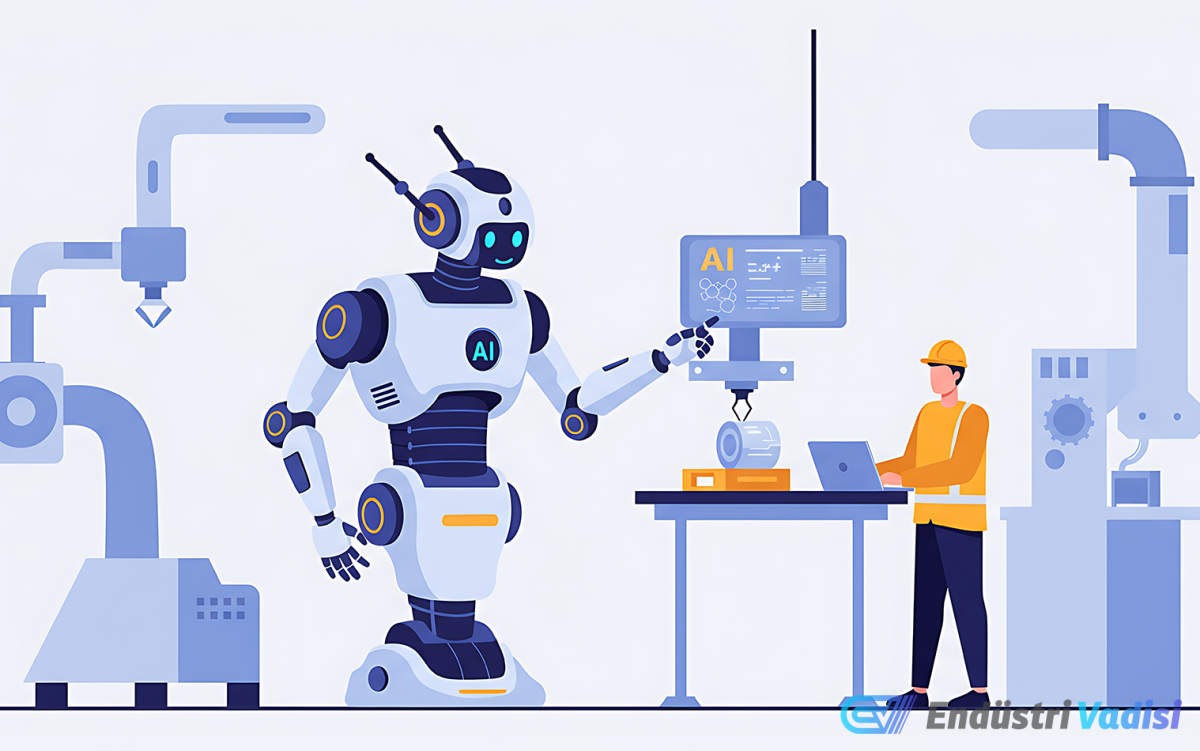
## Don't Just Produce Robots, Build Trust: The Future of Humanoid Robots Depends on Service
The future of humanoid robots depends not only on their technological achievements but also on their continuous operability in the field. A lack of service infrastructure jeopardizes the functionality of even the most advanced robots.
Although people's perception of robots is changing, humanoid robots and physical AI applications continue to capture imagination and interest. From factory floors to distribution centers, service points to homes, these robots promise to redefine automation by taking on complex physical tasks. According to a McKinsey report from October 2025, the humanoid robot market could exceed $600 million by 2031; this growth is driven by labor shortages, an aging workforce profile, and the pursuit of efficiency in logistics, manufacturing, and retail.
### Technical Challenges and the Importance of Service Infrastructure
While the production of humanoid robots is accelerating, the absence of a scalable and reliable service infrastructure remains a significant shortcoming. Until this infrastructure is established, even the most advanced robots are at risk of failure.
Engineering Achievements Are Not Enough
Consider a high-tech automobile; how devastating would it be to realize that the vehicle you entrust with your daily life lacks a service center or spare parts for repairs? Similarly, this is the danger faced by humanoid robot manufacturers. Exciting advancements in engineering can overshadow the concrete requirements of real-world applications.
The post-installation process will determine whether robots become widespread or stall. A minor malfunction, missing spare parts, or untrained personnel can turn this technological marvel into an operational burden.
### The Two Lives of Robots
As stated in the McKinsey report, "While the prototypes that make headlines are impressive, they are still far from delivering continuous, reliable, and economical performance in real-world environments." In other words, every robot has a life in the lab and a life in the field.
While robots' performance may seem flawless in controlled environments, different factors come into play when they are deployed in the field: lighting, floor conditions, training levels, and even cultural acceptance. The autonomous mobile robot (AMR) industry has shown how easily small real-world interventions can disrupt operations. Humanoid robots, being much more complex electromechanical systems, will face even greater challenges in areas such as balance, agility, and safety.
Without a robust service infrastructure—including periodic maintenance, trained field technicians, remote diagnostics, and fleet management software—even the most advanced robots may fall short in customers' operating environments.
### Service Costs and Trust
In the world of mobile and collaborative robots, ongoing support expenses can be up to three times the initial product price. Thinking about service as an afterthought increases these costs, while unexpected downtime can halt operations and erode trust.
Early planning, however, reduces failures and service calls, facilitates growth, and keeps costs under control in the long run.
### Lessons Learned from the First Waves of Automation
The AMR and collaborative robot sectors have demonstrated what happens when service lags behind innovation. OEMs underestimated the complexity of supporting field operations; inadequate and untrained support led to downtime and customer dissatisfaction.
Proactive, planned service strategies—preventive maintenance, trained technicians, and close customer communication—reduced failures by up to 90%, increasing uptime and customer satisfaction.
### Overcoming Robot Anxiety
Human psychology is as important as technological challenges in adoption. The workforce resists change, and fear of job loss and complexity create barriers to automation. The concern that robots will replace workers increases fear; however, if operators do not trust or understand the machines, their use will decrease.
For example, autonomous cleaning robots used in retail stores, despite being designed to operate independently, are often used manually by employees. Similar behaviors can be observed with humanoid robots; therefore, investment in user training and change management is essential.
### Customer Expectations: Always-On Reliability
In warehouses and manufacturing facilities, automation is critical infrastructure; it's not just an experiment. Once workflows are reorganized and personnel are trained, a single failure can completely halt production.
Customers are increasingly relying on OEMs for service and support, and outsourced maintenance will be the fastest-growing segment until 2032.
Customers are not just buying robots; they are buying reliable and successful outcomes. This trust is both technical and emotional; the expectation for quick responses, effective solutions, and uninterrupted operation is high.
### Waiting is Risky: Establish Service Now, or Face a Crisis
In the past, when Tesla's sales outpaced its service infrastructure, customers had to wait for months. A similar situation is unfolding in the humanoid robot sector; pilot projects are progressing rapidly, but a service ecosystem is not being built.
OEMs unprepared for the initial challenges may suffer reputational damage. Trust builds loyalty, while negligence breeds anger.
### The 3R Model for Success
- Readiness: Establish a network of trained, certified technicians in robotics.
- Responsiveness: Minimize failures with rapid intervention, immediate parts replacement, and remote diagnostics.
- Reliability: Implement predictive and preventive maintenance programs, feeding data back to R&D.
This approach transforms service into a strategic advantage, increases customer trust, accelerates growth, and generates recurring revenue. According to the McKinsey report, after-sales support accounts for 40-50% of total OEM profits in many industries; the same opportunity exists for humanoid robots.
### Conclusion: Don't Just Build Technology, Build Trust
Humanoid robots are on the cusp of commercialization; the next big leap will be in keeping the hardware operational. OEMs that integrate service readiness today will be tomorrow's industry leaders. Ultimately, customers want not just robots that walk and work, but robots they can trust.























