





Ahmet Ö.
Kurumsal
- Thread Author
- #1
## A New Era in Industry with Portescap's Contribution to Humanoid Robots
As the robotics sector rapidly transitions from science fiction dreams to real factory floors, a new generation of humanoid robots is emerging, poised to revolutionize industry, healthcare, and daily life. These robots don't just automate; they are designed to move like humans, work alongside us, and sometimes take over tasks for us.
However, recreating human movements doesn't solely depend on software and artificial intelligence. The key to this movement begins with fundamental components like actuators and motors that offer a combination of compact size, lightweight design, and superior performance. This is where Portescap comes in. As a brand of the Regal Rexnord family, Portescap supports next-generation robotic manufacturers transitioning from prototype to production, leveraging decades of experience in miniature motion systems and a reliable track record in high-performance medical and industrial applications.
### The Rise of Humanoid Robotics
For centuries, engineers, scientists, and storytellers have been fascinated by the idea of future humanoid machines, and this concept found its place in literature and cinema before the technology even emerged. These robots, experimental from the mid to late 20th century, typically operated in basic programmed scenarios with slow and limited movements.
From the 2000s onwards, breakthroughs in artificial intelligence, computing, motion control, and materials science transformed this concept into an achievable goal. Today, humanoid robots can walk, balance, manipulate objects, and respond to voice commands or sensor feedback.
The purpose of this form factor is not merely to mimic the human body, but to operate in human environments — spaces designed according to our dimensions, tools, and workflows — without requiring extensive infrastructure changes. This makes them exceptionally suitable for working alongside humans on the production line, in warehouses, healthcare, or in the field.
### Preparing for Challenging Environments
Most of today's robotic applications are used in controlled environments such as warehouses or hospitals. However, as technology advances, future systems may walk on the ocean floor, enter radioactive zones, or perform maintenance in the vacuum of space.
In such environments, the risk of working due to dangers like high heat, pressure, and radiation that await humans is unacceptable. Humanoid robots and exoskeleton technologies safely extend human capabilities into these hazardous areas, performing tasks remotely, reliably, and without risking operators.
Portescap has experience in manufacturing motors for extreme conditions such as high heat, chemical exposure, and vibration. The company seamlessly supports OEMs in transitioning to field applications with solutions designed with sealing, insulation, and special materials.
### Motor Solutions for Functional Hands
One of the most critical features of humanoid robots is their ability to interact with their environment like humans. This necessitates them having functional hands.
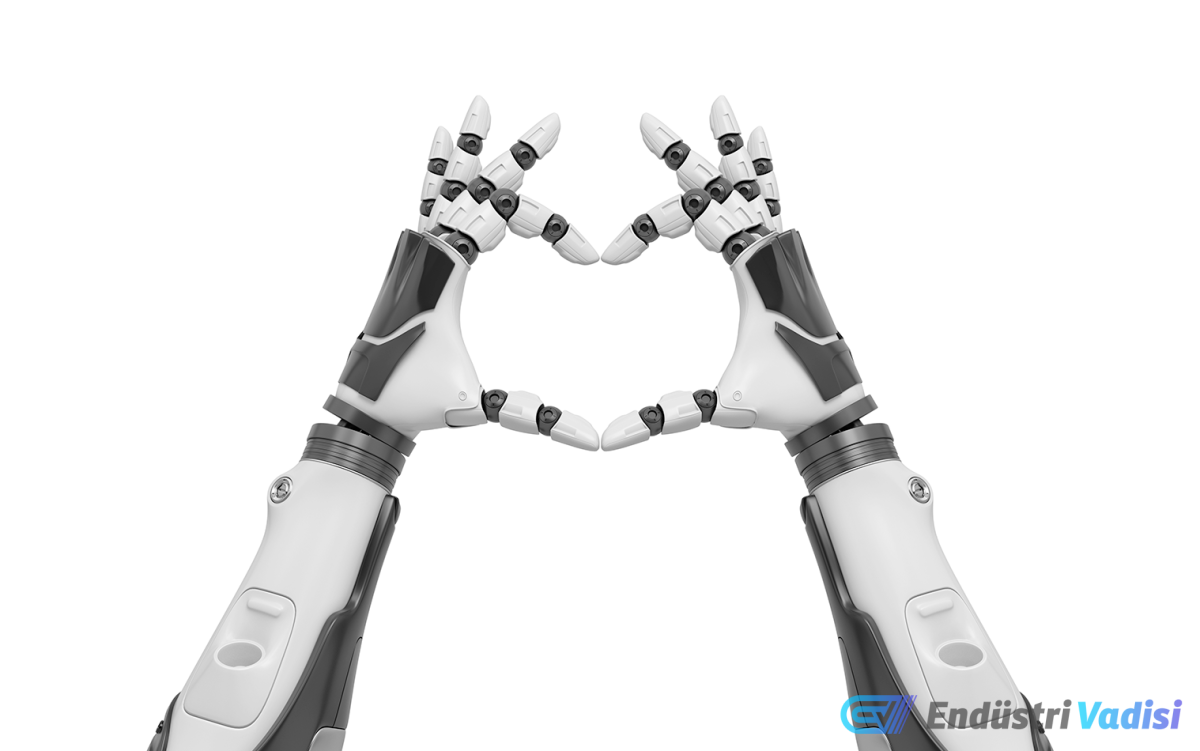
The human hand is an engineering marvel that combines delicate manipulation, strong grip, and complex movements in a small and adaptable form. A robotic hand, in turn, needs to be small, powerful, and precise enough to meet these characteristics.
Portescap offers a wide portfolio of motor technologies, such as cylindrical motors (in the form of thin batteries) and flat motors with short axial distances. These motors can be integrated into the fingers or palm. Furthermore, with brushed DC, hybrid stepper, and brushless DC (slotted and slotless) options, they help achieve the ideal balance between speed, torque, fluidity, and efficiency.
Portescap's distinguishing feature is its direct collaboration with engineers, providing full support from gearbox and encoder integration to performance optimization. Whether it's fast, high-volume gripping or multi-jointed smooth movements, they offer solutions tailored to every need.
### The Realization of Bionic Technologies
Unlike humanoid robots, this technology shows its greatest and most transformative impact in prosthetics. Portescap's motor technology supports next-generation bionic limbs that combine functional grip and intuitive control.
Prosthetic developers typically aim for 80% dexterity of the human hand and 10-20 basic movement patterns. These designs must be lightweight, durable, efficient, and cost-effective. Portescap stands out in this field with its expertise in both high-quality and cost-focused designs.
### From Conceptual Design to Mass Production
Robotics OEMs are moving quickly to prove next-generation technology. Funding is secured through demos and pilot projects, strategic partnerships are formed, and market position is strengthened. In this process, motion system providers need to be fast, reliable, and flexible.
Portescap performs small-batch production for R&D testing while simultaneously leveraging Regal Rexnord's global manufacturing power for scaling. Thanks to its experience in demanding sectors such as medical devices and aerospace, it offers a quick transition to mass production.
This scalability facilitates parallel testing of different configurations and the selection of the best option. Portescap's global support network reduces development risk and shortens time-to-market.
### The Robotic Partner of the Future
As robotics moves into the real world, success will depend on more than just innovation: motion solutions will need to be precise, reliable, and scalable.
From form-fit options to technical expertise, manufacturing agility to application support, Portescap offers everything OEMs need to bring humanoid robots and exoskeleton systems to life. Combined with Regal Rexnord's global strength, Portescap blends local expertise with worldwide reach, supporting the transformation of ideas into market-ready solutions.