








Cengiz Özemli
Akademisyen
- Thread Author
- #1
## Real-Time Inline Ellipsometry for Thin Film Coating Control in Roll-to-Roll Manufacturing
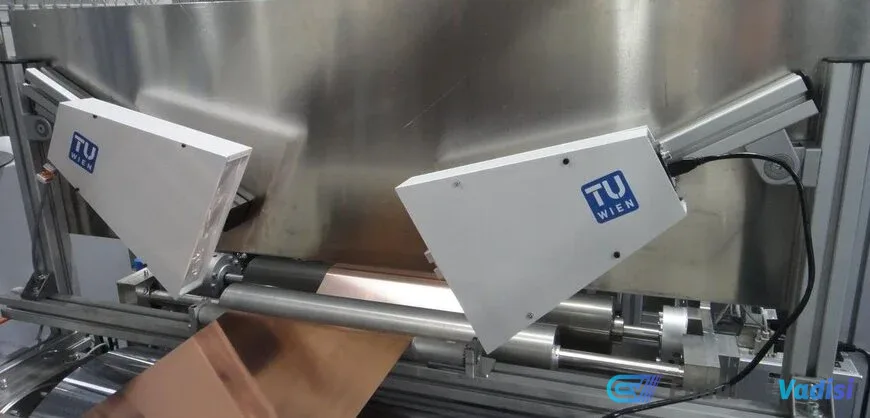
Researchers at TU Wien have developed an inline imaging ellipsometer for high-speed roll-to-roll manufacturing environments. Integrated with a polarized industrial camera from Allied Vision, this system enables real-time measurement of coating thickness and uniformity on moving substrates at production line speeds, providing thin film control.
### Challenges of Thin Film Inspection in Roll-to-Roll Manufacturing
Roll-to-roll processes apply functional coatings onto flexible substrates, such as polymer films or metal foils, at speeds exceeding 100 meters per minute. These coatings are used in lithium-ion battery electrodes, flexible electronics, and display components.
Quality control in high-speed production is challenging. Traditional methods often rely on sampling or offline measurements. Consequently, variations in viscosity, temperature fluctuations, or coating alignment issues are only detected after an entire roll has been processed.
The imaging ellipsometer developed by TU Wien allows for continuous monitoring of coating thickness and uniformity across the entire substrate width during production.
### Optical Architecture for Inline Ellipsometry
Ellipsometry determines film thickness and optical properties by measuring changes in the polarization of reflected light. While common in laboratories, classic ellipsometers require large optical paths and mechanical scanning, making them difficult to adapt to industrial lines.
The TU Wien system replaces traditional refractive optics with large-aperture Fresnel lenses. Fresnel optics reduce both size and cost while maintaining the controlled angle of incidence required for ellipsometric measurements.
This setup enables full-width inspection of moving foils up to 300 mm wide, and the system can operate directly on a roll-to-roll coating line.
### Polarized Imaging with Industrial Machine Vision
At the heart of the system is Allied Vision's polarized machine vision camera. Featuring a Sony IMX250MZR CMOS sensor, the camera offers a resolution of 2448 × 2048 pixels and 75 fps global shutter operation. It has a pixel size of 3.45 µm.
The sensor incorporates a nanowire polarizer array that simultaneously captures four different polarization angles: 0°, 45°, 90°, and 135°. Filtered in 2 × 2 pixel groups, this structure records multiple polarization states in a single frame.
Illumination is provided by an LED source with a range of 350 nm to 1100 nm. A fixed linear polarizer at 45° is placed along the light path. Software measures the intensity ratios of the reflected polarization components, generating coating thickness maps for each frame acquired at production speed.
### Industrial Validation on Functional Coatings
The imaging ellipsometer was tested with industrial materials such as PEDOT layers on PET foil used in organic electronics and electrolyte coatings on copper foil used in battery production.
In both cases, the system generated quantitative thickness maps while the substrate moved at production speed.
Polarimetric analysis enabled the detection of coating irregularities, edge defects, and surface imperfections that are invisible to conventional optical systems. This early detection can improve process control and reduce material waste.
### Mechanical Stability and Noise Reduction
Inline ellipsometry measurements are susceptible to mechanical and optical problems such as foil vibrations, substrate birefringence, and backside reflections.
The system addresses these issues by performing measurements directly on the roll geometry of the substrate. This approach ensures a stable angle of incidence and reduces vibrations.
Backside reflections are directed away from the detector, while the LED light source uses a bandwidth of 20-60 nm. This bandwidth prevents interference fringes between front and back reflections, eliminating errors in thickness measurement.
### Scalability to Industrial Roll-to-Roll Production
The measurement concept is scalable for foils up to approximately 2 meters wide, which is common in battery electrode and flexible electronics production lines.
The system can measure a wide range of thicknesses, from nanometer-level light-absorbing layers to micrometer-scale transparent coatings. Its design, featuring a fixed wavelength, fixed illumination angle, and no moving parts, makes it easy to integrate into production lines.
These research findings are detailed in a report by Ferdinand Bammer and colleagues, published in the journal Flexible and Printed Electronics in 2026.






















