








Cengiz Özemli
Akademisyen
- Thread Author
- #1
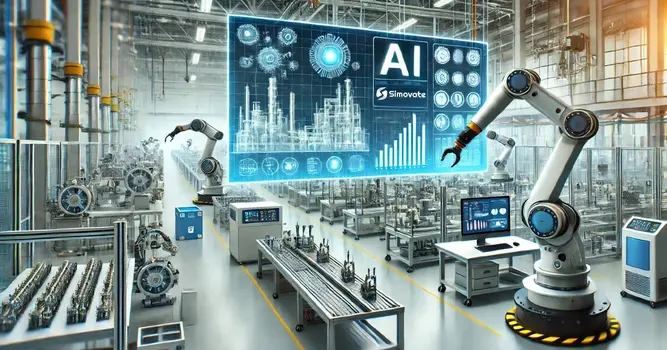
As we approach 2025, exciting developments are being observed in how industry will leverage artificial intelligence. Especially in predictive maintenance systems, AI optimizes maintenance processes, saving businesses time and cost. Furthermore, image processing and quality control applications in production lines are becoming more efficient with the advantages provided by artificial intelligence. This transformation will play a significant role in the transition to the Industry 4.0 era and offer solutions that will increase competitiveness.
Artificial intelligence in predictive maintenance systems
Artificial intelligence is becoming central to predictive maintenance systems in industry. These systems analyze the condition of machines before they fail, identifying maintenance needs. In this context, the advantages provided by artificial intelligence are:- Increased Efficiency: Machine status is continuously monitored, preventing unnecessary downtime.
- Cost Savings: Preventing unexpected failures reduces maintenance costs.
- Data Analysis: Artificial intelligence processes large datasets to optimize machine performance.
Traditional Maintenance vs. Predictive Maintenance
| Feature | Traditional Maintenance | Predictive Maintenance | |||||||||
|---|---|---|---|---|---|---|---|---|---|---|---|
| Maintenance Frequency | At time intervals | Based on machine condition | Cost | High | Low | Failure Risk | High | Low | Data Usage | Limited | Extensive |
</TR>
[TR]
</TR>
[TR]
</TR>
[TR]
</TR>
In conclusion, the role of artificial intelligence in predictive maintenance systems is critical for the transformation of industrial processes.
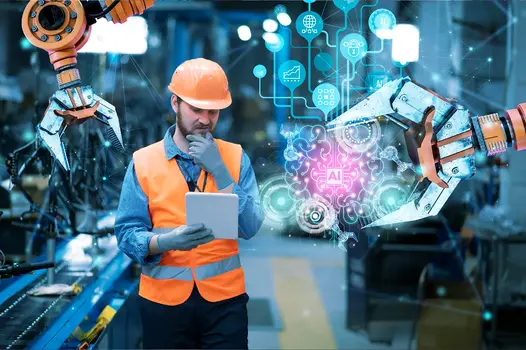
Image Processing and Quality Control Applications in Production Lines
Image processing technologies play a critical role in increasing the efficiency of production lines and optimizing quality control processes. Especially when integrated with artificial intelligence, these systems become even more powerful. Here are some important applications in this area:- Product Detection: Artificial intelligence can instantly recognize products on production lines and identify anomalies through image processing algorithms.
- Defective Product Detection: By automatically detecting defective products, it minimizes errors in the production process. This saves time and cost.
- Quality Analysis: It evaluates the quality of products instantly using images taken during production. This ensures that products entering the market meet standards.
- Data Analysis: Data collected through image processing helps in better understanding and optimizing the production process.
</LIST>
In conclusion, AI-powered image processing systems provide higher quality and efficiency in production processes.























