
Cengiz Özemli
Akademisyen
- Thread Author
- #1
## Virtual Control Systems for Real-World Applications
Today, virtual PLCs are not only used for simulation purposes but also to read real-world inputs, control outputs, or initiate motion. We embark on an in-depth journey into the world of virtual PLCs.
### What is a Virtual PLC?
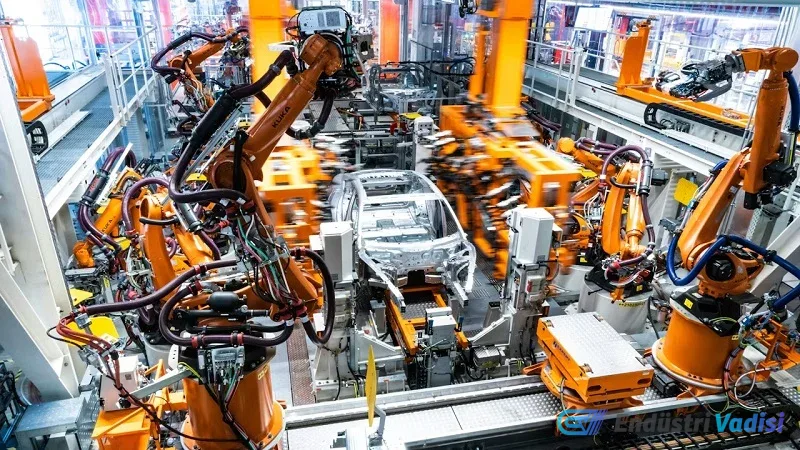
A virtual control system (vPLC) is a software-based PLC installed on an industrial server located on the network. Its popularity is rapidly increasing with advancements in computer technologies and the growing demands of the Industrial Internet of Things (IIoT). The release of Siemens' S7-1500V virtual PLC, in particular, has enabled companies like Audi to establish fully automated assembly lines using virtual PLCs with their Edge Cloud 4 production line.
### Differences Between Physical PLC and Virtual PLC
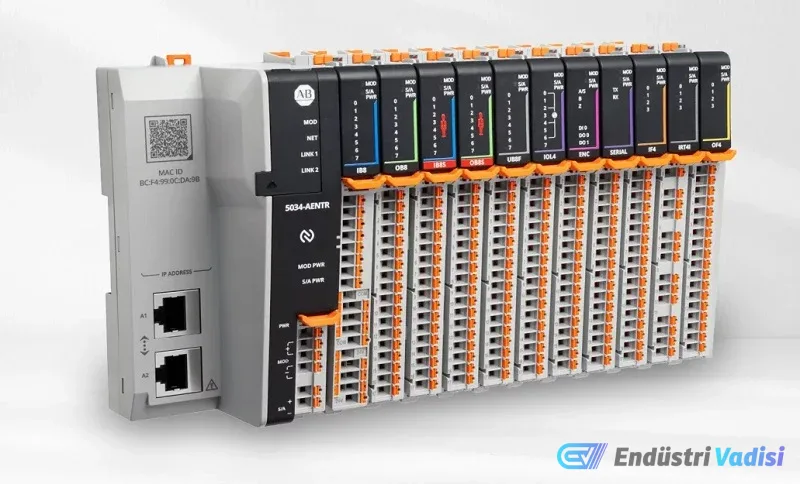
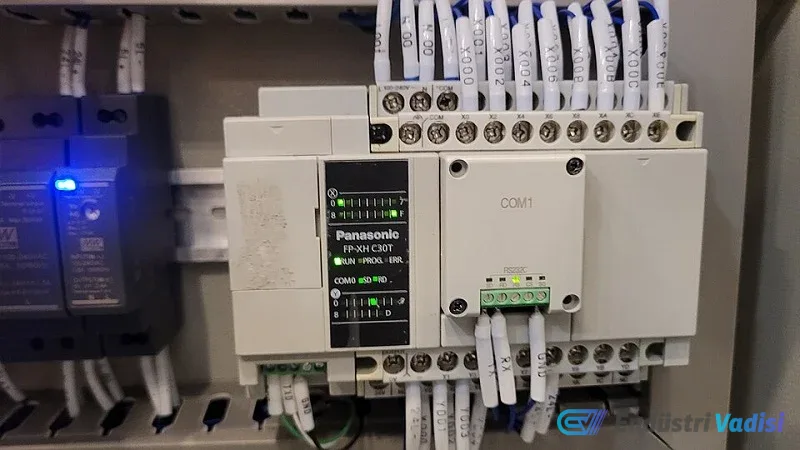
Most control panels in the world contain a physical PLC that automates the process and manages inputs/outputs. These hardware components have seen significant developments in the last 10-15 years with multi-core processor technology. In contrast, a virtual PLC is entirely software-based and runs on industrial computers or servers. Its processing power is derived from the processors of these high-performance computers.
### Why Virtual PLC?
In the world of automation, the concept of "decoupling" describes the separation of software and hardware. While physical PLCs use manufacturer-specific software environments, virtual PLCs can be installed and migrated to supported computers regardless of brand or manufacturer.
Typically, upgrade options for PLCs are limited; memory can be increased, but processor power is fixed by the model. For example, in Allen-Bradley PLCs, memory is locked, and if insufficient, a new PLC must be purchased. In virtual PLCs, however, memory and processor resources can be easily increased at the PC level, and new PLC instances can be created.
### Virtual PLC and I/O Architecture
Since virtual PLCs run on industrial computers or servers over the network, the architecture of I/O devices mostly remains unchanged. Today, field I/O devices communicate via fieldbus protocols such as Ethernet/IP, PROFINET, or Modbus TCP. The placement of the virtual PLC in the IT department requires access to the machine network, which necessitates IT and OT departments to securely organize VLANs and network structures.
### Durability and Security
Physical PLCs are designed to withstand harsh conditions (high temperature, dust, humidity). Industrial servers, however, are primarily for computing purposes, and their redundancy features for critical tasks may not be as advanced as those of physical PLCs. Dual-redundant processor systems, as found in Siemens processors, prevent data loss during power outages; typical servers may not have these features. Therefore, the hardware hosting the virtual PLC must be chosen to suit these conditions.
### Backup and Risks
Consider a large assembly line running hundreds of robots, thousands of I/Os, and dozens of servos on a single server; this leads to a single point of failure. If there is a problem with the server, the entire line could stop. RAID storage, redundant servers, and fast recovery methods with virtual machines are appropriate.
### The Role of Industrial PCs
In new automated equipment, at least one industrial PC is becoming standard for alarm data collection, recipe management, batch control, and production efficiency reports. These IPCs are gaining server capabilities, supporting virtual PLC solutions. This reduces hardware costs while enabling the establishment of more dynamic and easily upgradeable control systems.
### Conclusion
I don't believe virtual PLCs will completely replace physical PLCs; however, it is certain that they will play an increasingly important role in the world of automation. With vPLC usage, data management can be shifted to the IT infrastructure, and integration with small, low-level control systems becomes easier. This allows Cloud and IIoT applications to communicate more effectively with automation equipment, enabling the creation of smarter and more dynamic factories.