



Erkan Teskancan
Kurumsal
- Thread Author
- #1
Working with data is a complex process. It requires a solid understanding of how data is collected, processed, and utilized to provide tangible benefits to operations and the company.
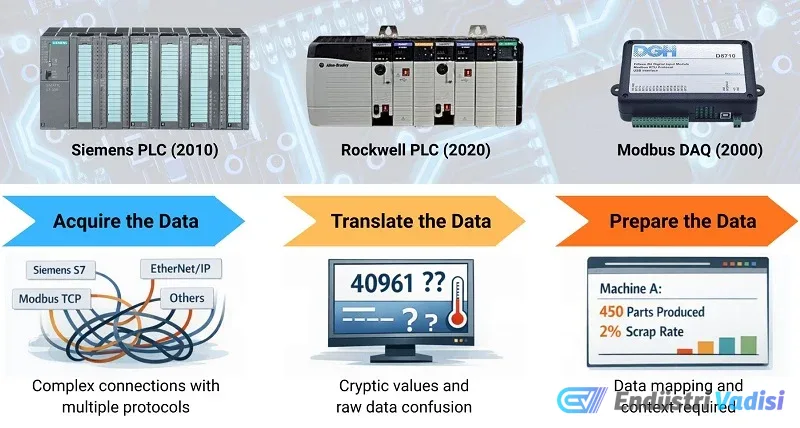
Manufacturing data is locked within many different machines. PLCs controlling assembly lines, CNC machines processing parts, and sensors monitoring temperature each speak a different language. Obtaining, interpreting, and using this data to improve operations is one of the biggest challenges in modern manufacturing.
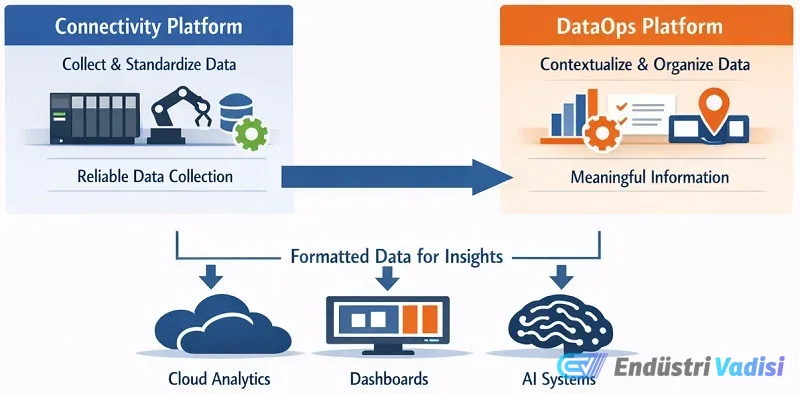
This article explains how two types of industrial software that solve this problem work together: connectivity platforms like Kepware collect data from machines, while DataOps platforms like HighByte process this data and prepare it for business needs.
### Diversity of Industrial Equipment and Data Challenges
Every factory has equipment from different manufacturers, installed over decades. A 2010 Siemens PLC might be alongside a 2018 Allen-Bradley controller and an older 2005 machine with Modbus connectivity. Each uses different protocols and data formats.
When engineers want to use this data for dashboards or quality analysis, they face three main challenges:
- Specific technical knowledge is required for each machine. Expertise in 5-10 different protocols like Siemens S7, Allen-Bradley Ethernet/IP, and Modbus TCP is needed.
- Raw data is meaningless and lacks context. For example, a temperature sensor might give a value of "40961"; the meaning of this number cannot be known without understanding the device structure.
- Business systems expect contextualized and organized data. Instead of raw data like "Register 1045 = 450", meaningful data such as "Machine A produced 450 parts, with a 2% scrap rate" is required.
### The Role of Industrial Connectivity and DataOps
Two different platforms specialize in connecting and processing data:
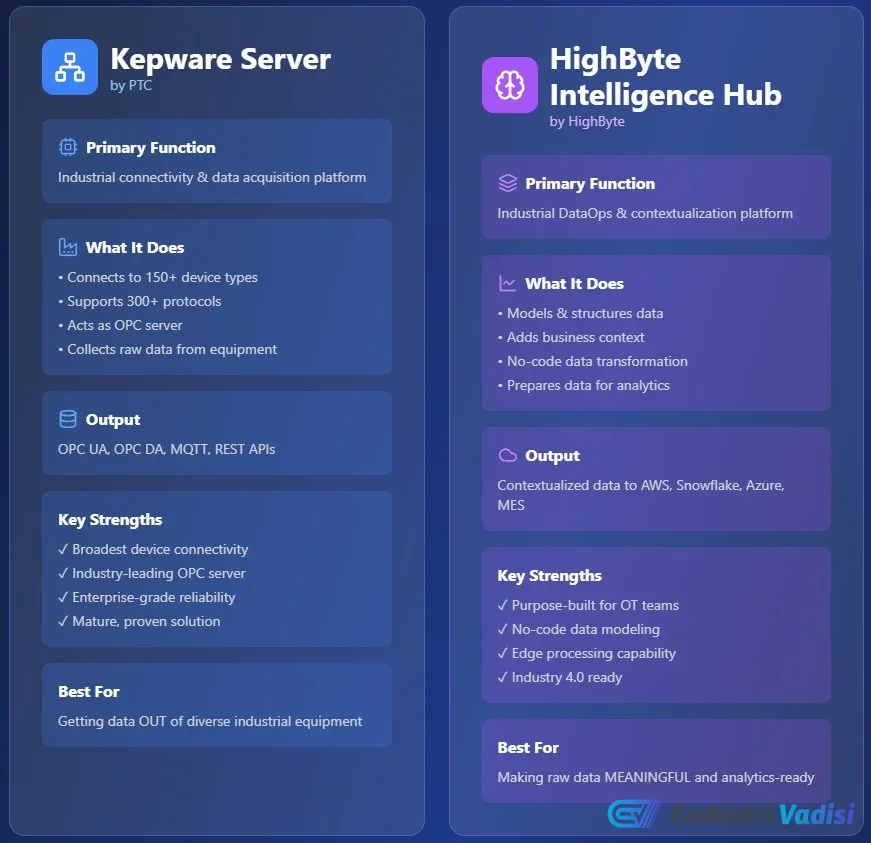
- Connectivity platforms (like Kepware) reliably collect data from each machine and convert it into a standard format.
- DataOps platforms (like HighByte) transform this standard data into meaningful information, add context, and present it ready for use.
### Kepware Features
- Fast machine connection with over 150 pre-built drivers
- Centralized management panel for multi-site operations
- Conversion to industry-standard OPC UA and MQTT protocols
### HighByte Features
- Creation of reusable data models for similar equipment
- Adding business context to technical data (e.g., production line, product type, shift)
- Real-time calculation of performance metrics with edge processing
- Data quality management and version control
### Real-World Application
In a packaging line, Kepware connects to a Siemens PLC, an Allen-Bradley PLC, a Modbus device, a weighing device using a custom serial protocol, and an OPC UA-enabled vision inspection system. All data streams are standardized to the OPC UA format.
HighByte takes this data, calculates important metrics like production count and scrap rate, and transmits the contextualized data to a quality analysis platform. Both Kepware and HighByte are centrally monitored and distributed.
### Why Two Separate Systems?
- Kepware specializes in supporting and keeping current hundreds of protocols from different manufacturers.
- HighByte, on the other hand, specializes in data modeling, business context, and analytical integrations.
This separation provides enterprise-scale and flexibility.
### Implementation Steps
- 1-2 months: Pilot application on a single line
- 2-3 months: Rollout across the entire facility
- 3-6 months: Expansion to other facilities
- Ongoing: Advanced data quality control, predictive maintenance, and AI integration
### Conclusion
When used correctly, manufacturing data becomes a valuable asset for the business. The combined use of specialized platforms like Kepware and HighByte transforms data from a complex burden into a business-developing resource.