







Hasan S. Cemkan
Kurumsal
- Thread Author
- #1
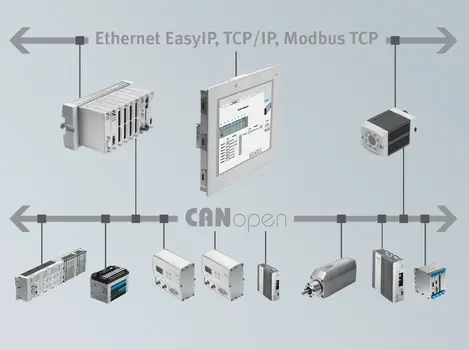
In an industrial environment, communication protocols play a critical role in ensuring the efficiency and security of automation systems. Protocols such as Profinet, Ethernet/IP, and Modbus offer various advantages for different applications. However, when choosing a protocol, it is important to consider factors such as speed, security, and integration. In this article, we will compare these three protocols and examine which brands support which protocols.
Comparison of speed, security, and integration in protocol selection
Speed, security, and integration are critically important in the selection of industrial communication protocols. Here are the effects of these three criteria on Profinet, Ethernet/IP, and Modbus:| Criterion | Profinet | Ethernet/IP | Modbus |
|---|---|---|---|
| Speed | High (up to 100 Mbit/s) | Medium (up to 100 Mbit/s) | Low (up to 115.2 kbit/s) |
| Security | Advanced security features | Medium security level | Limited security measures |
| Integration | Easy integration, wide range of device support | Wide range of devices | Limited integration capability |
Security: Profinet has become a more secure option for industrial environments by offering advanced security features.
Integration: Profinet and Ethernet/IP facilitate integration with broad device support, while Modbus offers limited compatibility.
In conclusion, the appropriate protocol should be selected based on the needs and system architecture.
Which brand supports which protocol? Compatibility table
The selection of industrial communication protocols largely depends on the compatibility of the devices and systems used. The compatibility table below shows which protocols are supported by popular industrial automation brands:| Brand | Profinet | Ethernet/IP | Modbus |
|---|---|---|---|
| Siemens | ✅ | ❌ | ✅ |
| Rockwell | ❌ | ✅ | ✅ |
| Schneider | ✅ | ✅ | ✅ |
| Mitsubishi | ✅ | ❌ | ✅ |
| Omron | ❌ | ✅ | ✅ |
- ✅: Supported
- ❌: Not supported