








Erkan Teskancan
Kurumsal
- Thread Author
- #1
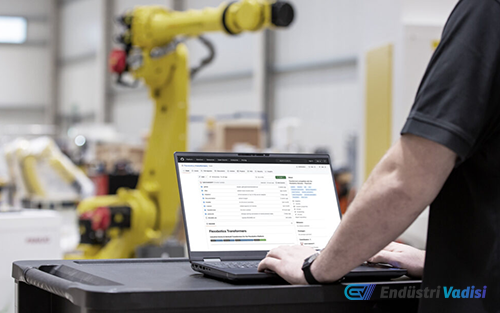
## Flexxbotics Updates FANUC Industrial Robot Connector Driver in Open-Source GitHub Project
Flexxbotics has updated its FANUC industrial robot connector driver, which extends the robot-machine interface in automated manufacturing environments and advanced robotic cells. This update supports real-time robot awareness and secure bidirectional control.
### FANUC Connector Driver Update
Flexxbotics has revamped the FANUC robot connector driver in its open-source Flexxbotics Transformers project on GitHub. The updated driver offers broader protocol compatibility, real-time status monitoring, and secure control between robots and machines. Released under the Apache 2.0 license, this innovation provides flexible and scalable robot connectivity in manufacturing processes.
### Software-Based Automation in Industrial Robotics
Industrial robots are fundamental components of modern manufacturing, but ensuring compatibility between robot controllers and devices using different protocols—such as factory machines, safety systems, and testing equipment—previously required complex and customized projects. With the updated driver, Flexxbotics enhances software-based automation by enabling FANUC robots to communicate with over 1000 machine brands and models in a standardized manner.
### FANUC Robot Connector Driver Features
- Extended interoperability for FANUC robots across standard industrial protocols and proprietary interfaces
- Secure bidirectional read/write control for closed-loop robotic cell automation
- Real-time robot awareness of factory machine operational states and process variables
- High-frequency parallel data pipeline for collecting robot speeds, force, torque, cycle time, performance, and other telemetry data
### Enabling Multi-Point Robot Communication
The Flexxbotics driver can communicate directly with all equipment in the operating environment; it supports numerous protocols, from different brands of PLCs to safety systems, sensors, and other devices like cameras. This ensures that newly added machines gain compatibility within the entire automation network, eliminating the need for special integrations and providing bidirectional multi-communication.
### Advanced Robot Applications
With KAREL programming support, the updated driver supports the following applications:
- Robotic cell control and process execution
- Digital traceability and compliance for automated manufacturing processes
- Orchestration and fault detection of robot clusters
- Advanced robotic machine tending and material handling
- Closed-loop autonomous process control and real-time adjustments
- Synchronization of robots with manual operations in production lines
- Intelligent job changeover and recovery systems
- Multi-data collection for Physical and Industrial AI training
### Open Source and Commercially Viable Licensing
The updated FANUC connector driver is available open-source under the Apache 2.0 license. Automation engineers and integrators can extend the robot interface using Python, develop custom automation logic, and use it in commercial projects.
Tyler Modelski, CTO and co-founder, stated, "Robot integrations often required custom, point-to-point solutions. By extending the FANUC driver, we are providing secure and standard open robot connectivity across factories."
Tyler Bouchard, CEO and co-founder, added, "Open standards are critical for expanding the functionality of robotic automation. Our open-source driver offers manufacturers a solid foundation on the path to creating fully autonomous factories."
### About Flexxbotics
Flexxbotics is an automation platform that delivers scalable smart factory autonomy. It provides harmonious and comprehensive communication between equipment, robotics, and enterprise IT systems through software-based automation. It digitizes continuous manufacturing environments, yielding flexible and powerful solutions.























