






Gooseyluke
Endüstri Vadisi
- Thread Author
- #1
What are the Application Areas of 3D Printers?
In recent years, 3D printer technologies have transformed production processes by offering revolutionary innovations across a wide spectrum, from industrial manufacturing to the medical field. The speed and flexibility they provide, especially in prototype production, create significant advantages in engineering and design processes. This not only reduces development costs but also shortens the time it takes for products to reach the market. Furthermore, the early detection of errors during the production process offers a critical advantage in terms of quality control.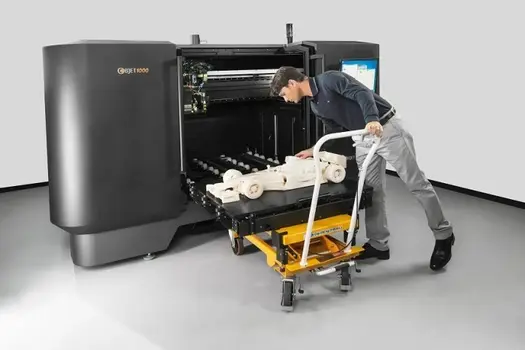
Use of 3D Printers in the Industrial and Automotive Sectors
In the industrial manufacturing sector, 3D printers hold an important place in terms of production flexibility and cost-effectiveness. They can produce parts with complex geometries, which are difficult or impossible to produce with traditional manufacturing methods, with high precision.This is particularly critical in the aerospace sector. In these areas, where lightness and durability criteria are paramount, parts produced via 3D printers both increase fuel efficiency and optimize carrying capacities. The defense industry similarly benefits from this technology, where equipment and spare parts needed in the field can be produced quickly, increasing operational efficiency.
The automotive sector utilizes 3D printing technologies in both prototype development and spare parts production processes. Innovative solutions can be experimented with during the design phase of vehicle parts, and production costs are reduced. On the other hand, it allows for the high-precision production of three-dimensional models for architectural projects. While complex structures become easier to understand, potential problems that may arise during the design process are identified in advance, saving time and cost.
Other Areas Where 3D Printers Are Used
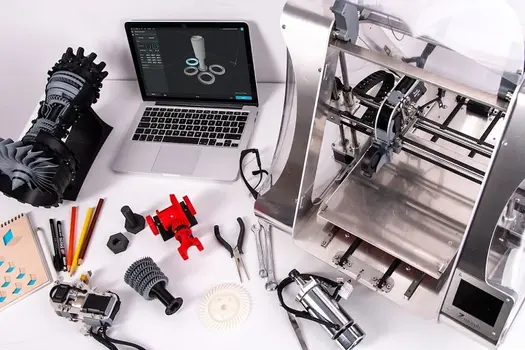
3D printers, frequently used in the medical and healthcare fields, are preferred in surgical planning processes. By producing patient-specific anatomical models, operations can be performed more safely and effectively. The ability to produce implants, prostheses, and various medical devices tailored to individual needs increases patient satisfaction and treatment success.Looking ahead, the use of 3D printer technologies is expected to become even more widespread in many areas, from manufacturing to healthcare, and from architecture to the defense industry. Their preference is increasing due to the growing variety of materials, higher printing speeds, and lower production costs.