








Ahmet Ö.
Kurumsal
- Thread Author
- #1
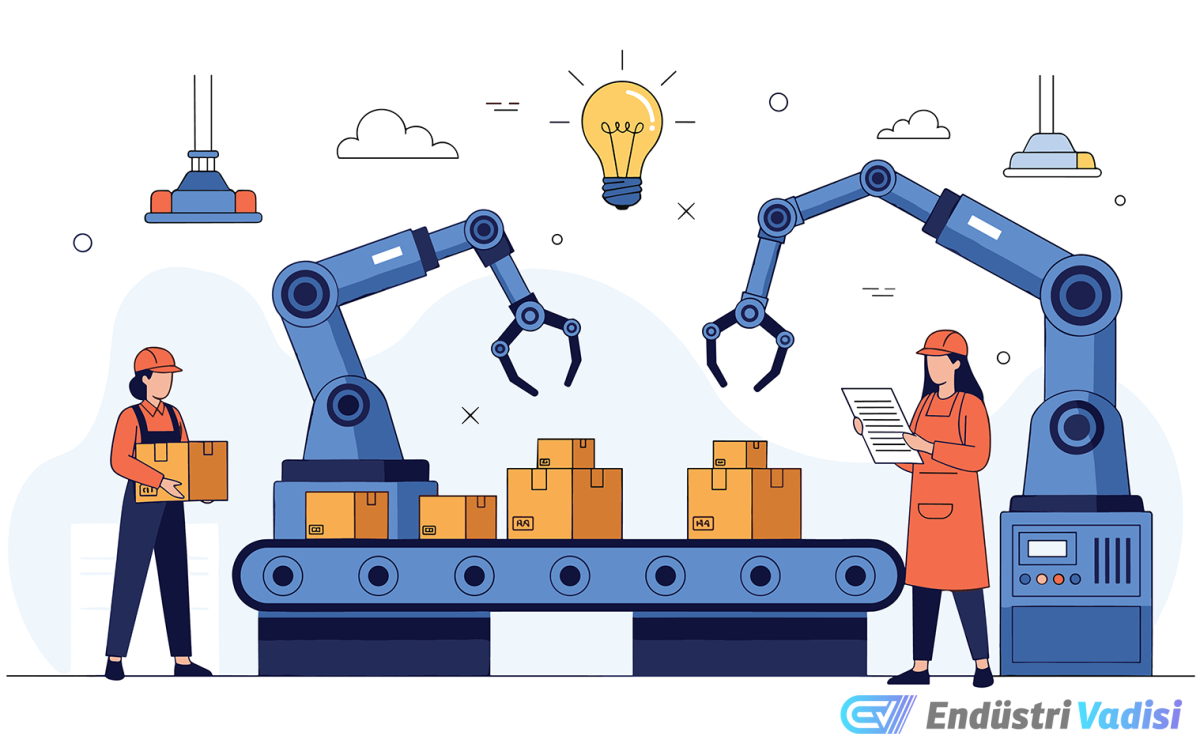
## Transition to Proactive Safety: Adapting to Flexible and AI-Powered Robotics
In industrial automation, outdated fixed safety measures are being replaced by context-aware systems and wireless safety controls that enhance worker health and operational efficiency.
As today's industrial environments rapidly evolve from fixed automation to flexible, autonomous systems, traditional safety protocols are proving inadequate. This necessitates a new proactive safety approach that protects worker health and system efficiency.
The increase in automation and strict oversight by regulatory bodies like OSHA mandate a comprehensive rethinking of worker protection. With Robotic Process Automation (RPA) projected to reach a $31 billion market by 2030, the safety infrastructure for flexible and AI-powered robots far exceeds existing standards designed for fixed automation.
### Limitations of Fixed Boundaries: Challenges Posed by Flexibility
Previously, industrial robotics were protected within fixed boundaries, often by physical cages. However, today, flexible robots like Autonomous Mobile Robots (AMRs) and advanced material handling vehicles have become versatile entities capable of moving in complex environments. This renders older safety standards, based on fixed rules, insufficient.
With the increase in mobile and autonomous machines, classic emergency stop buttons are becoming less effective. Therefore, high-integrity safety in large areas needs to be ensured with wireless, secure control devices.
### Context-Aware Safety Approach
AI is moving robotic systems out of simple closed systems and into dynamic and complex real-world environments. Safety systems must now be proactive, not just reactive or predictive.
Modern robots should not be confined to repetitive programs; they must be able to anticipate, evaluate, and avoid potential hazards proactively. This allows safety to be a trigger for increased system flexibility, rather than an impediment.
### Tools Required for Safety
Digital twins and simulations play a crucial role in ensuring proactive safety. Digital twins provide advantages in terms of both cost and time by testing complex systems in various scenarios.
Furthermore, safety systems should not rely solely on ideal conditions; for example, a dirty camera lens or low-light conditions should not lead to unnecessary shutdowns. Therefore, distributed intelligence and highly reliable communication systems enable quick and accurate decisions from critical information.
Wireless control solutions act as a bridge in this critical adaptation process between safety and autonomy. This makes it possible to share safety-critical information from human to machine and vice versa.
The potential of automation in industrial automation and warehouse management is immense; however, this can only be realized if safety is accepted as an indispensable and intelligent layer.























