







Ahmet Ö.
Kurumsal
- Thread Author
- #1
## Next-Generation Physical AI Accelerated by Texas Instruments and NVIDIA Collaboration
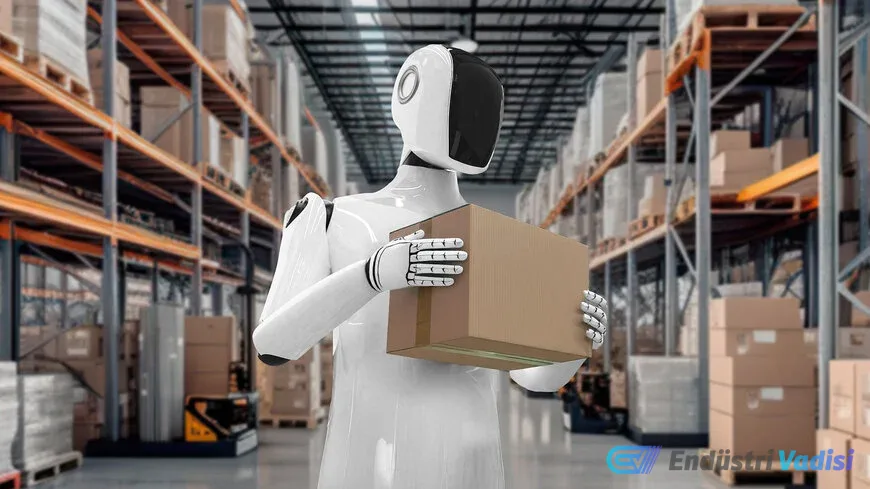
Texas Instruments is collaborating with NVIDIA to integrate mmWave radar technology with the NVIDIA Jetson Thor platform. This integration significantly enhances safety by providing low-latency 3D perception and reliable navigation in complex environments for humanoid robots.
The successful operation of humanoid robots in the real world relies on the seamless integration of high-performance computing, precise mechanical control, and environmental sensing components. The collaboration between TI and NVIDIA bridges the critical hardware gap between virtual simulation and physical motion. TI's real-time motor control and sensing portfolio, combined with the NVIDIA Jetson Thor platform, offers deterministic safety and high operational reliability, differentiating it from competitors.
### Bridging the Gap Between Simulation and Physical Motion
One of the fundamental challenges in robotics is accurately and timely translating complex AI model decisions into physical motion. This architecture prevents delays by establishing a complete foundation with functional safety capabilities. Thanks to TI's real-time technologies, all joints and subsystems of the humanoid robot operate synchronously and precisely. This allows perception and motion capabilities to be validated earlier in the design phase, accelerating the transition from digital prototypes to commercial products.
### Enhanced 3D Perception with Sensor Fusion
A key technological advantage of this collaboration is the mmWave radar sensor's support for traditional camera-based vision systems. In industrial environments with low light, heavy dust, or reflective surfaces like glass doors, cameras can be limited. The integration of TI's IWR6244 mmWave radar with NVIDIA Holoscan via an Ethernet-based sensor bridge enables low-latency 3D perception, reducing false positives and ensuring safe robot navigation.
### Optimal Power Management and Edge Processing
For next-generation physical AI systems, energy efficiency is critical, alongside motion and vision. The collaboration leverages TI's power and analog expertise to meet the high energy demands of NVIDIA's advanced GPU. This structure, which integrates networking, sensing, and processing, offers real-time decision-making without the need for continuous cloud connectivity. This "edge-to-edge" hardware synergy enables the scalable deployment of smarter, safer, and more efficient humanoid robots.
### Technical Specifications
- TI mmWave radar: IWR6243 model
- Processing platform: NVIDIA Jetson Thor
- Sensing integration: Ethernet-connected sensor bridge with NVIDIA Holoscan
- Safety: Deterministic safety and real-time motor control
- Sensing latency: Low-latency 3D perception
- Power management: TI power and analog circuit expertise
- Applications: Safety and navigation of humanoid robots
The collaboration between Texas Instruments and NVIDIA in next-generation physical AI marks a significant step in the industry, offering high safety, low latency, and efficient energy management in robotic applications.