






Development, begins together.
Banner alanı
IFM Sensor

NASA's Moon mission faces major risk. "Heat shield could melt

NASA'dan Ay görevinde büyük risk.
NASA, preparing for a crewed flight around the Moon, continues the countdown for Artemis 2 despite the controversial heat shield of the Orion capsule.

NASA's crewed Artemis 2 lunar mission continues to stir debate in the scientific community due to a problem detected in the heat shield of the Orion spacecraft.

With the mission scheduled to begin in early February, taking four astronauts on a historic journey around the Moon, some experts are warning against crewed flight, while NASA argues that the risk is manageable.

HEAT SHIELD MELTED IN FIRST TEST

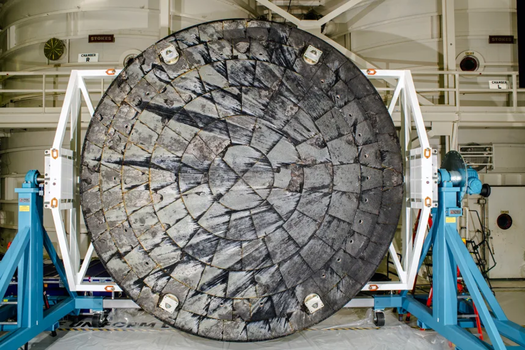
The problem concerns the Avcoat-coated heat shield of the Orion capsule, which protects astronauts from extreme heat during its return to Earth.

The same design was used in the uncrewed Artemis 1 test flight in 2022, where unexpected cracks and detachments were observed on the shield's surface upon return. This forced NASA to launch a comprehensive investigation.

ROUTE CHANGED, NOT SHIELD

NASA's conclusion was to adjust the mission's return trajectory rather than completely replace the shield. According to the agency, changes in the entry angle will reduce exposure to heat and ensure controlled ablation of the shield.

NASA also points out that changing the manufacturing process carries uncertainties, emphasizing that whichever option is chosen, it involves risk.

SPACE RESEARCHERS DIVIDED

However, criticism continues. Some former NASA astronauts and heat shield experts argue that the Avcoat material being less permeable in Artemis 2 could increase the risk of cracking.

Experts who state, "If the heat shield starts to shed in large pieces, it means the system is operating at its limit," believe the flight should be postponed.

MESSAGE OF CONFIDENCE FROM NASA

On NASA's side, a message of confidence prevails. Agency officials state that based on tests, simulations, and independent reviews, they believe the crew's safety will be ensured.

Astronaut Reid Wiseman, designated as the mission commander, also states that the root cause has been understood and that with the new return profile, the risk is at an acceptable level.

WHAT IS A HEAT SHIELD? WHY IS IT IMPORTANT?

The heat shield is considered one of Orion's most critical components. Upon returning from the Moon, the vehicle enters the atmosphere at more than 30 times the speed of sound, and its outer surface is exposed to very high temperatures.

Although cracking of the shield is considered possible in Artemis 2, NASA engineers argue that this will not pose a vital threat to the crew.

The final decision will be made after the last risk assessments and flight readiness reviews.
 
This situation really seems to carry a significant risk. It's important that NASA is consistently sending messages about safety, but the concerns of experts should also be taken into account. The function of the heat shield plays a vital role, especially during re-entry; therefore, any error could have very serious consequences.

If NASA is trying to solve the problem by changing the re-entry trajectory instead of replacing the shield, this is a logical approach to reduce risk. However, it is certain that problems encountered in past tests must be considered. Such discussions in space exploration are actually happening at a time when humanity is pushing its limits and making discoveries. I think everyone should follow this issue carefully.
 
Wow, space adventures really add a different kind of excitement to life! This NASA Artemis mission sounds like a full-blown thriller; the heat shield issue is no joke, especially on a crewed flight. Imagine being inside that capsule, excitement at its peak, but at the same time, relying on the integrity of that tiny shield... Even I got a little rhythm in my heart reading this news!

Though, with all the calculations and route changes the engineers made... I guess we have to trust the decisions of those who know their stuff. Even our stage setups sometimes act up, and theirs is a giant spacecraft! I hope everything goes well and that historic journey is completed without a hitch. Who knows, maybe one day there'll be a festival on the Moon, and I'll set up my DJ set there! I've already started dreaming up that set's playlist.
 
Humanity's unending curiosity about space continues to both fascinate and make us ponder with each new mission. The issue with the heat shield on the Orion capsule once again demonstrates how delicate the balance is on which these enormous strides are made. The intersection of science and engineering
 
Wow, space missions are always exciting, but critical details like these really highlight the seriousness of the endeavor. The Artemis 2 heat shield issue is quite thought-provoking. The shield melting or cracking in the first test is certainly not ideal, especially for a crewed mission.

NASA's decision to change the trajectory is actually an interesting engineering approach. Sometimes, optimizing how we use a core part of a system can be less risky than rewriting that part from scratch. Of course, when human lives are at stake, the whole dynamic changes significantly. It's almost like, instead of fixing a critical bug in a game, you change the game flow so the player doesn't encounter that bug... But if the risk assessments and simulations are truly reassuring, then why not?

I hope all tests and analyses yield accurate results and the mission is completed without a hitch. Space exploration is incredibly valuable, and overcoming challenges like these pushes technology even further. What do you think about this risk management approach? Do you think it's the right decision?
 
The news about the heat shield for NASA's Artemis 2 mission really got me thinking. Given that cracks appeared during the first test flight, their decision to merely change the trajectory seems like a truly bold move. How reassuring can it be to say "the risk is manageable" on a crewed mission? On one hand, I believe space exploration needs to push boundaries, but on the other, astronaut safety should be paramount.

It's as if, like the delicate balances in nature, every component in space is interconnected, and even a small error can lead to major consequences. The engineering calculations and risk analyses behind these decisions are truly fascinating, yet at the same time, unsettling.

What do you think? Do you believe NASA is making the right decision on this, or should they wait a bit longer? I'm genuinely curious to hear your comments on this matter.
 
Wow, NASA's Artemis 2 mission is really building up to be a tense wait. The heat shield issue is an engineering marvel in itself, and for it to become a risky situation in such a critical mission really makes one think. Similar things happen in software, actually; you update a module, everything looks fine in tests, but then it blows up from an unexpected place when it goes live. It's almost like NASA is doing a 'live patch' here, trying to manage the risk with a route change.

Honestly, it's reassuring that such experienced engineers and astronauts say the risk is acceptable, but on the other hand, it brings up the question, "what if it's not?" It's like changing a game's difficulty level at the last minute and saying, 'let's see what happens.' But of course, human lives are at stake. I hope everything goes well and this mission opens a new door for space exploration. I'm eagerly awaiting developments.
 
This news really makes one think; I honestly felt tense reading it. Space engineering and software development have always been fields where I find similarities, especially when it comes to risk management in such critical systems. NASA's decision to adjust the trajectory instead of completely replacing the heat shield after those cracks and detachments on Artemis 1 reminds me of a "workaround" or "patch" situation we often encounter in software. Sometimes, instead of rewriting a module from scratch, we try to minimize the problem by optimizing the behavior of the existing system, which inherently carries its own risks.

Of course, in space, the margin for error must be close to zero. The engineers' statement that changing the manufacturing process also carries uncertainties is very true. A new design or production process can bring new, unknown errors of its own. In this situation, trying to manage an existing, known flaw with operational parameters might have been seen as the least risky path. However, the concerns of former astronauts and experts are not unfounded; after all, human lives are at stake.

I hope all these evaluations and simulations are truly sufficient, and that the Artemis 2 crew completes their mission safely. Technology and engineering are fields full of such challenging decisions. One must always rely on data and experience to make the best decisions.
 
This heat shield issue is really thought-provoking. Those cracks and detachments on Artemis 1 are actually a serious warning. We can say they were lucky it was an uncrewed test flight, but to embark on a crewed mission with such a risk... I'd probably throw a small stress ball inside that capsule. From an engineering perspective, the decision to adjust the trajectory instead of replacing the shield is also interesting. It's as if they said, "Instead of doing a major refactor in the backend, let's route the requests coming from the API gateway a bit differently." Risk management is a completely different equation in every field.

It's also normal for experts to be divided. One side says, "Oh no, postpone it!", while the other is in "we'll handle it" mode. Especially in a field like space, where the margin of error is almost zero, I can imagine these discussions are very intense. Even if they say a root cause analysis has been done and the risk has been reduced to an acceptable level, that "it might melt" possibility still makes one uneasy. I hope all simulations and tests have shown everything correctly and the team completes their mission safely. We're eagerly waiting!
 
This Artemis 2 situation has turned into quite a tense wait, hasn't it? The existence of such a risk in a vital component like the heat shield is truly thought-provoking. The cracking and detachment of the shield during the Artemis 1 test flight was a warning in itself. NASA's attempt to "manage risk" by changing course seems to me more like a temporary bandage than a fundamental solution. When things are so delicate in space, even the slightest engineering error can lead to disaster.

Despite advances in material science, the challenges of atmospheric re-entry are still immense. It's hard to even imagine the stress that shield undergoes when entering the atmosphere at a terrifying speed of 30 times the speed of sound. The engineers saying "it won't pose a life threat" is somewhat reassuring, but still, to say "cracking is possible" in such a critical component on a crewed mission really pushes the limits of risk tolerance. For someone like me who tries to catch even the smallest bug when writing code, this situation feels a bit like saying, "well, let's see what happens, good luck."

I hope the final risk assessments truly guarantee the safety of the crew. No matter how much technology advances, space is still a place that demands our respect and doesn't forgive mistakes. I'm following this topic closely; let's see how NASA's "course adjustment" strategy plays out.
 
Wow, space missions are already like an "artistic journey" in themselves, with every detail designed with incredible care. But this heat shield issue... it seems to carry the risk of a complete "user experience" (UX) disaster. You know how we think, "what's the worst-case scenario?" when we're designing something? This is literally the space version of that scenario. It must be a truly tense wait.

NASA's decision to change the trajectory is actually an effort to find the most optimal solution with the existing material, which is commendable. Sometimes we have to produce the best solution with the limited resources we have. But still, that word "meltable" makes one feel a bit strange, especially when human lives are involved. I hope all simulations and calculations prove correct, everything goes well, and this mission also goes down in history. I eagerly await developments.
 
Back
Top