






Cengiz Özemli
Akademisyen
- Thread Author
- #1
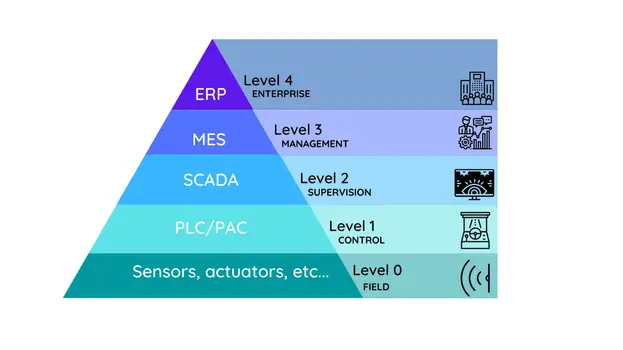
Modern SCADA platforms have evolved beyond basic monitoring and control functions, becoming suitable hosts for critical operational components of Quality Management Systems (QMS). Positioning daily quality functions directly within the MES/SCADA layer enables real-time quality control at the point of production, while reserving enterprise systems for governance, analytics, and regulatory oversight.
In this application, quality ceases to be a post-production inspection process. Operators perform quality checks, inspections, and data collection through the same SCADA interface they use to run the line. For example, in-process inspections are executed directly on the SCADA, results are automatically logged to the historian and compared against defined limits. When quality deviations are detected, the system can trigger alarms, notify supervisors, or, through integration with line control, prevent the progression of non-conforming products.
### Advantages of Integrating Quality Management with MES/SCADA
- Enables seamless interaction between quality functions and other MES capabilities such as order management, track and trace, recipes, and overall equipment effectiveness (OEE).
- Reduces software complexity, lowering integration and licensing costs.
- Minimizes the number of independent systems and data paths, limiting cybersecurity risk.
- Reduces training needs, as production teams work with familiar tools instead of switching between multiple applications.
### Designing QMS and MES/SCADA Architecture
Moving all quality functions directly to the production floor may not always be appropriate; especially for enterprise-level activities such as batch record review, product segregation, regulatory reporting, audit management, and long-term statistical analysis, which are better suited for higher-level systems for governance and traceability. These functions require controlled access, formal approval processes, and data aggregation across multiple lines, facilities, or time periods.
A successful QMS-MES/SCADA integration requires not only software capability but also informed system design based on user roles and operational needs. Operator-intensive functions such as in-process quality checks, automated data collection, real-time alarms, and hardware interlocks should reside at the SCADA layer. Approval processes, exception management, and audit functions, however, can remain within the enterprise QMS.
### Change Management and Future-Proofing for Success
Integrating QMS with MES and/or SCADA involves not just technology, but also change management. Clear user responsibilities, functional design, and phased implementation support adoption and long-term success.
As SCADA platforms evolve, placing quality data and controls at the source lays the groundwork for future innovations such as advanced analytics and AI-driven optimization. Ultimately, integrating operational quality at the MES/SCADA layer transforms quality from a reactive process into an active and actionable part of daily production.
Last edited by a moderator: