






Erkan Teskancan
Kurumsal
- Thread Author
- #1
## IDS: Efficiency in Textile Recycling Increases with Artificial Intelligence and Image Processing
The growing amount of old textile waste in Germany requires new technological solutions for efficient recycling. DETEX, an AI-based image processing system supported by IDS Imaging Development Systems GmbH, is making the textile recycling process more effective.
Not even one percent of the annual textile waste accumulated in Germany enters a closed recycling loop. Fast fashion products, consisting of low-quality and diverse materials, make manual sorting difficult. While approximately 200,000 tons of 1.4 million tons of textiles are analyzed in detail, the vast majority is directed to thermal processing or export. At this point, automated systems can revolutionize recycling.
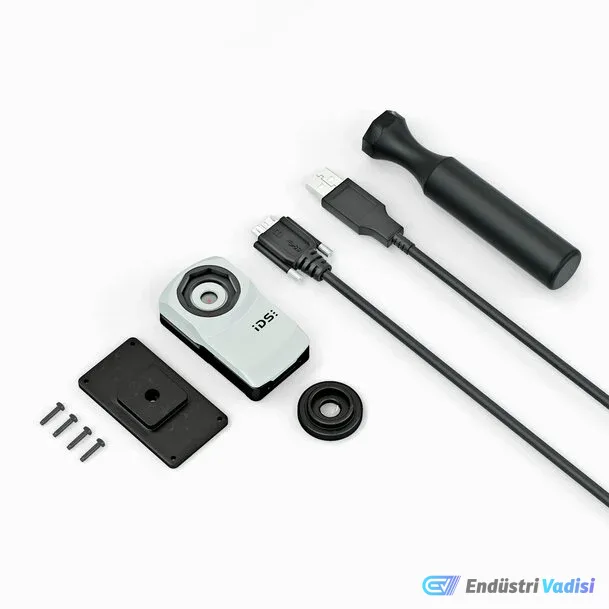
The Recycling Atelier, part of the Augsburg Institute for Textile Technology (ITA), focuses on this problem as a factory modeling the entire mechanical textile recycling process. The DETEX system developed here automatically classifies textiles using artificial intelligence and IDS's high-resolution uEye XC cameras, thereby increasing the efficiency of recycling.
### The Importance of Sorting in Textile Recycling
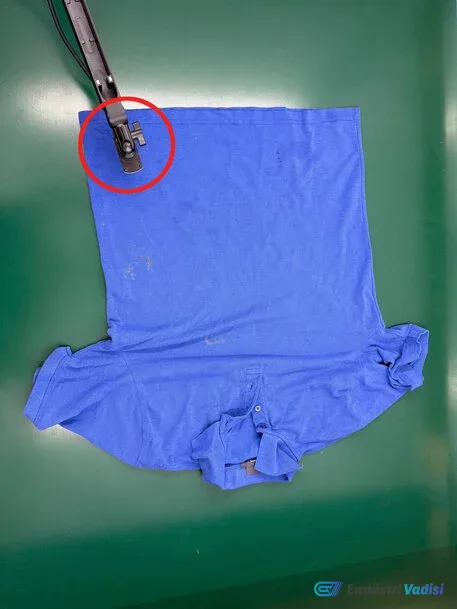
For old clothes to be transformed into new textiles, they must first undergo mechanical processing. In this process, buttons and zippers are removed; clothes are separated into their fibers. The length of the fibers must be preserved because this affects the quality of the recycled material. Considering the fabric structure and density, it is essential to sort textiles into the correct categories.
In old methods, sorting was done by hand, requiring high expertise and time. However, in other sectors, such classifications are performed by AI-supported automated systems. The DETEX project is developing artificial intelligence models for textiles to be sorted automatically and with high accuracy.

### How Does the DETEX System Work?
DETEX scans textile pieces on a conveyor belt with two high-resolution cameras. The first camera examines the type of garment, and the second camera examines material properties and stains. Artificial intelligence analyzes the images through pre-trained neural networks, classifying garments and material.
### Technical Specifications
- Cameras used: IDS uEye XC Starter Set
- Sensor: 13 megapixels
- Digital zoom: 24x
- Automatic white balance and color correction
- Software support: IDS peak SDK, USB3 Vision compatible
- Artificial intelligence: Classification with pre-trained models, object recognition, and material detection
- Training using at least 3000 sample photos according to product types
### Future Plans
The DETEX system will be developed as a modular mechanical-robotic solution. The new system will be able to perform detailed double-sided analysis with a free-fall system that can image textiles 360 degrees and robot-assisted grippers. Thus, textiles will be more comprehensively classified, and recycling and reuse paths will be optimized.
This innovation will be an important step in integrating textile waste into a closed recycling loop and will strengthen the role of industrial image processing technologies in recycling.