








Ahmet Ö.
Kurumsal
- Thread Author
- #1
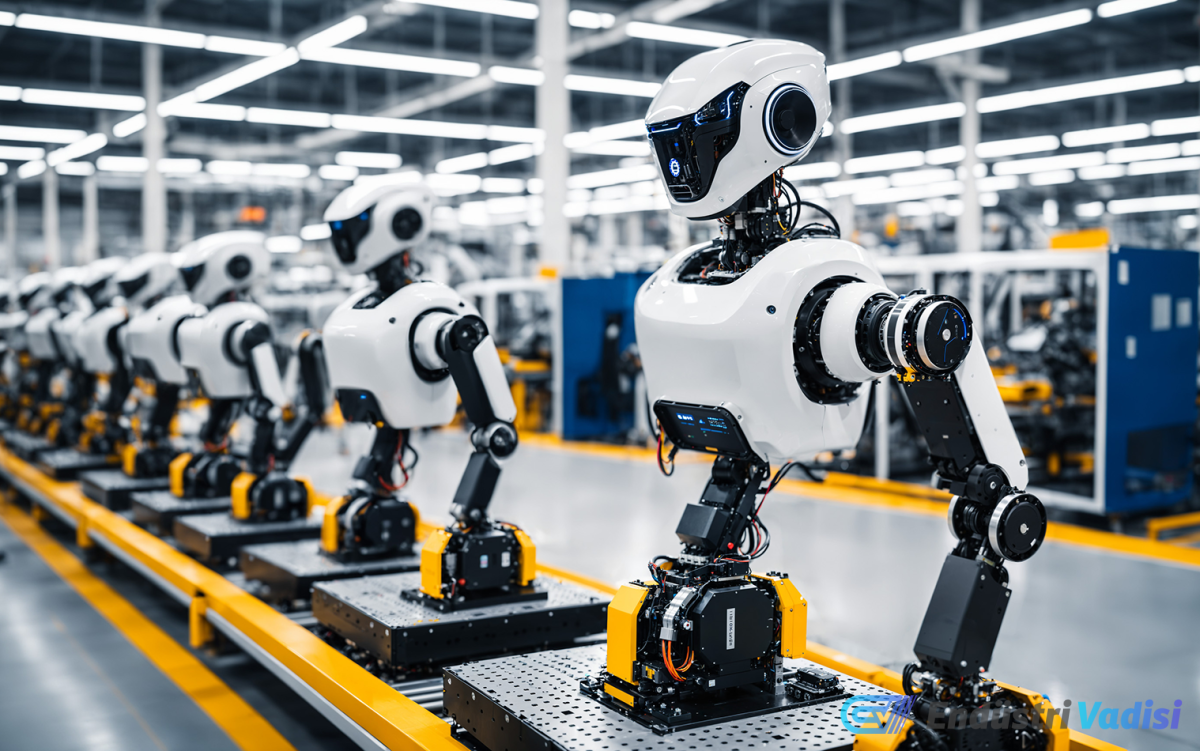
## Are We on the Cusp of a Humanoid Robot Revolution?
Humanoid robots present a challenging testing ground for physical artificial intelligence and advanced biomechanical systems. But will humanoid robots truly become widespread in the near future, or is this just an element of science fiction?
While some analyses predict the humanoid robot market will be worth $6.5 billion by 2030, some experts estimate that this technology might remain stuck in the pilot phase, with fewer than 20 companies using them in production lines by 2028. What is clear is that the era of physical AI has begun, and the foundations for a new era in all types of robotics are being laid.
### On the Frontier of Physical Artificial Intelligence
Physical artificial intelligence gives industrial systems the ability to deeply understand spatial relationships. However, merely having information is not enough; robots need to be able to understand their environment and apply this information safely and effectively. Humanoid robots must be able to perceive their environment like humans, adapt instantaneously, and integrate perception, intelligence, and movement.
These advancements are made possible by progress in sensors, actuators, edge AI processors, and efficient power systems. However, there may still be questions about the reasons for developing humanoid robots.
### Why Humanoid Robots?
There are several reasons for the increasing interest in humanoid robots in industry. Firstly, the labor shortage in critical areas such as manufacturing, logistics, and healthcare can be addressed by the flexibility and high skill of these robots. Unlike single-function robots, humanoids can perform different tasks and quickly adapt to changing conditions.
Secondly, humanoid robots can operate seamlessly in existing work environments designed for humans, eliminating the need for extensive re-arrangement of current facilities and reducing adoption costs. Thirdly, humanoid robots provide ideal testing grounds for the development of biomechanics, robotic engineering, and physical artificial intelligence.
### Foundations of Robot Intelligence
Physical artificial intelligence is the integration of AI with physical systems, offering real-time perception, movement, and adaptation capabilities. Sensors perceive the environment, processing units interpret this information, and actuators enable movement. These elements combine in real-time systems to allow robots to perceive their surroundings and move safely.
Features such as depth perception, environmental mapping, and object recognition are achieved through MEMS and CMOS sensors, as well as Time-of-Flight (ToF) sensors. These developments enable robots to react quickly and accurately to changes in their environment. Furthermore, edge AI and machine learning support the local execution of complex tasks such as perception, motion planning, and coordination.
Thanks to multi-motor drivers and precise controllers, humanoid robots can mimic human physical movements. The integration of these components gives humanoid robots safe, precise, and intelligent behaviors.
### Challenges and Future
There are significant issues that need to be resolved before the widespread use of humanoid robots; these include implementation difficulties, software improvements, data security, cost scalability, and regulatory standards. Additionally, human acceptance of these robots is an important factor.
Innovations in artificial intelligence, advanced sensors, high-performance semiconductors, and mechanical systems are progressing rapidly. As these technologies mature, humanoid robots will become widespread in many areas such as logistics, healthcare, manufacturing, and warehousing. Ultimately, robots will become valuable colleagues in work environments that require physicality, adaptability, and efficiency.