








Teknoloji Muhabiri
Endüstri Vadisi
- Thread Author
- #1
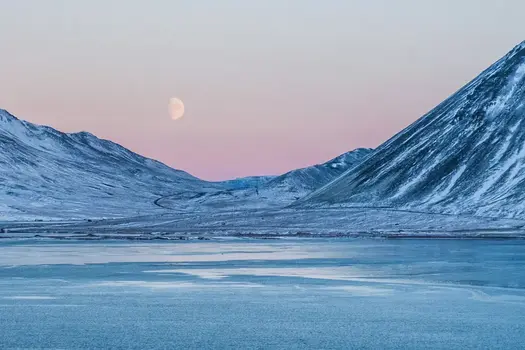
According to scientists, the Arctic region has entered a new, difficult-to-reverse era due to the impact of climate change. Greenland, which US President Donald Trump pressed to buy, is also among the "hotspots" most affected by extreme weather events.
According to a comprehensive study published by an international research team, extreme weather events are significantly increasing in the northernmost part of the world, and this increase is no longer "unusual" but is becoming a permanent pattern.
The research, published in the journal Science Advances, analyzed over 70 years of climate data and revealed that a new extreme weather regime has begun in the Arctic. According to the study, especially in the last 30 years, heatwaves, droughts, and unusual snow conditions have been observed even in regions that had never experienced extreme weather before.
“UNPRECEDENTED CONDITIONS”
Professor Gareth Phoenix, an ecologist from the University of Sheffield, summarized the seriousness of the findings with these words:
"Our research shows a sharp increase in the frequency of extreme weather events in the Arctic. These events have emerged very recently in one-third of the region. This means that the Arctic is entering a new era of extreme weather that it has never experienced before."
Researchers particularly focused on short-term but destructive extreme events that are not reflected in monthly averages. The data examined included heatwaves, droughts, sudden changes in snow cover, and disruptions in seasonality.
SOME REGIONS ARE MORE AFFECTED
Mapping studies show that Central Siberia, Western Scandinavia, and the coasts of Greenland are among the "hotspots" most affected by extreme weather events. The Canadian High Arctic Archipelago stands out as another risk area, notable for broken sea ice and wildfire smoke.
More frequent "rain-on-snow" events, along with rising temperatures, create an ice layer on the surface, locking away food sources. This poses a vital threat to Arctic animals, especially reindeer, which feed on lichen.
ECOSYSTEMS ARE NOT READY FOR CHANGE
Although the research did not directly examine ecological consequences, scientists agree that the impacts could be extremely devastating. This is because Arctic plant and animal species do not have the evolutionary equipment to adapt to such sudden and extreme weather conditions.
Juha Aalto, a climate scientist from the Finnish Meteorological Institute, emphasized the vital importance of seasonality for Arctic ecosystems:
"The growing season and snow conditions are critical for the survival of northern species. Disruptions to these balances fundamentally shake the functioning of ecosystems."
“ARCTIC DARKENING AND CARBON BALANCE AT RISK”
Previous research had shown that the Arctic is warming much faster than the global average. This process is described as "Arctic darkening," referring to the decline of vegetation. According to the new study, extreme weather events are among the most important triggers of this process.
The loss of vegetation not only disrupts the food chain but also the Arctic's carbon sequestration and release balance. This leads to cascading effects on the global climate system.
Miska Luoto, a geoscientist from the University of Helsinki, summarized the situation by saying, "These findings show that as the climate changes, Arctic ecosystems will be exposed to conditions they have never encountered before. The long-term effects of this on nature could be very serious."
Researchers believe that this new era of extreme weather in the Arctic is one of the most striking examples of the irreversible changes caused by global warming in planetary ecosystems.